
A metered paywall that turns regular readers into subscribers.
Let readers sample your journalism, then ask the ones who keep coming back to register and subscribe. PaywallProject’s metered paywall pairs a free registration wall with dynamic metering, set up and run by our team.

How a metered paywall works.
Free stories first
New visitors read a set number of stories for free. You decide how many.
Then a free sign-up
A registration wall asks for an email address before you ask for money, so your list grows with every visit.
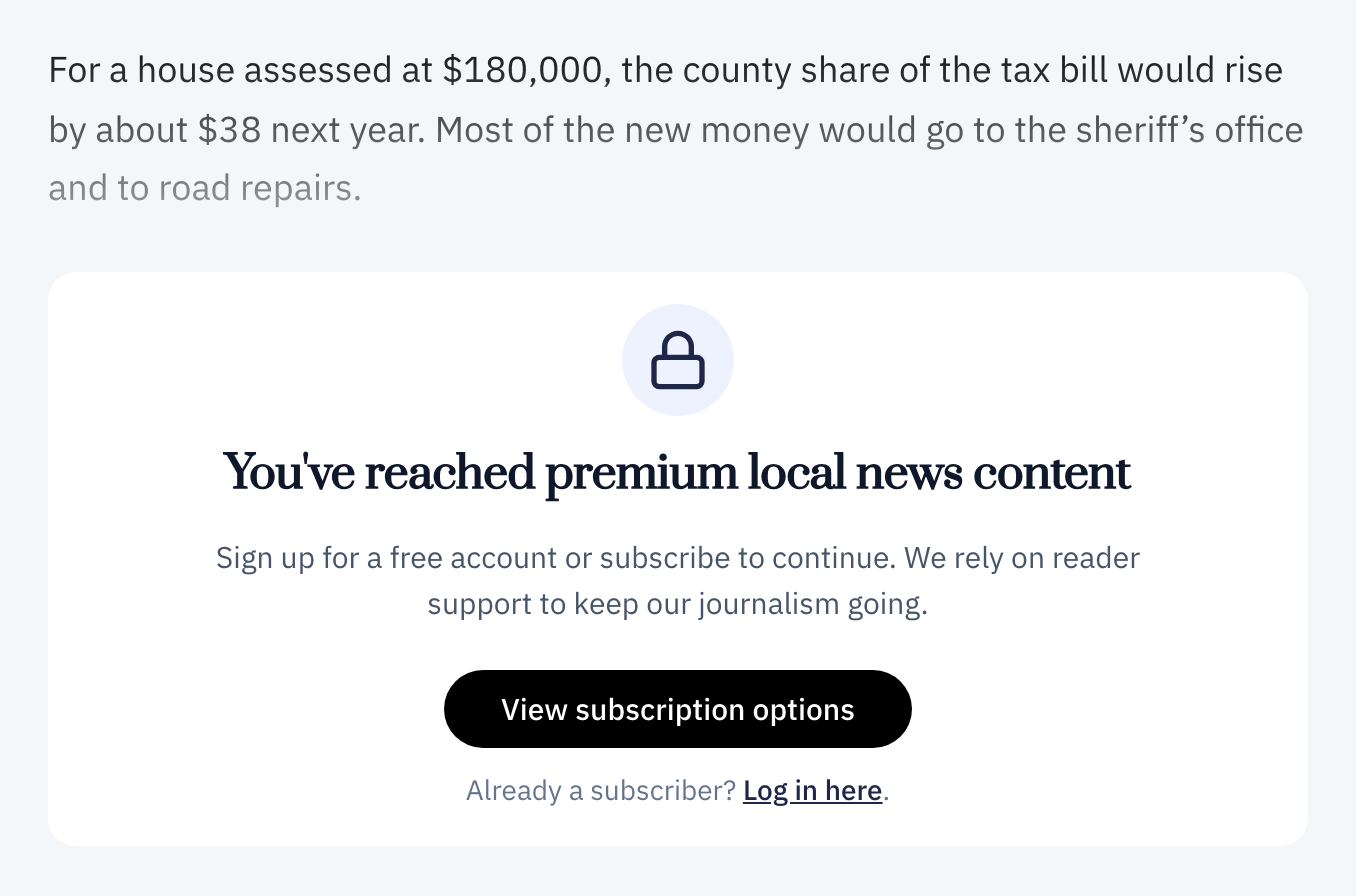
Then the paywall
Registered readers who keep reading see an offer to subscribe, with a checkout that takes seconds.
Included with Community, Daily and Regional.
What is a metered paywall?
A metered paywall lets readers view a set number of free articles before they must subscribe. It’s a kind of soft paywall: some of your journalism stays open, and the ask comes only once a reader has shown interest. A hard paywall, by contrast, locks every story from the first click.
For local news, a meter usually beats a hard paywall. Readers find you through search, social posts and links from neighbors. A meter lets those readers see what you do before you ask anything of them, and it keeps the stories your community needs free to read.
The meter is only half the job, though. On its own, it asks strangers for a credit card. Most people who land on your site read one story and leave, so a generous meter means almost nobody ever gets asked. That’s why we pair it with a free registration wall.
Inside the paywall
Metering that builds your list, then your revenue.
Dynamic metering
Set the meter in two stages.
Give anonymous visitors a free story, then show a registration wall. Registered readers get another free story before the paywall appears. You can change the numbers any time.
- Separate limits for visitors and registered readers
- Keep breaking news and public safety stories free
- Memberships and donations alongside or instead of paid plans
At the paywall
An offer readers can say yes to.
When registered readers run out of free stories, an upgrade message offers a paid plan on the spot, with Stripe Checkout or an inline checkout.
- Apple Pay, Google Pay and card
- Payments straight to your own Stripe account
- No revenue share on any managed plan
Bring them back
Newsletters keep the meter turning.
Every registration adds a reader to your newsletter. Each issue brings them back to the site, where they run into the meter again, and FastPass signs them in with one tap.
- Newsletters built in WordPress with Newsletter Glue
- One-tap sign-in with FastPass on Daily and Regional
- Subscriber analytics show who is close to converting

Gifts
Let subscribers share past the meter.
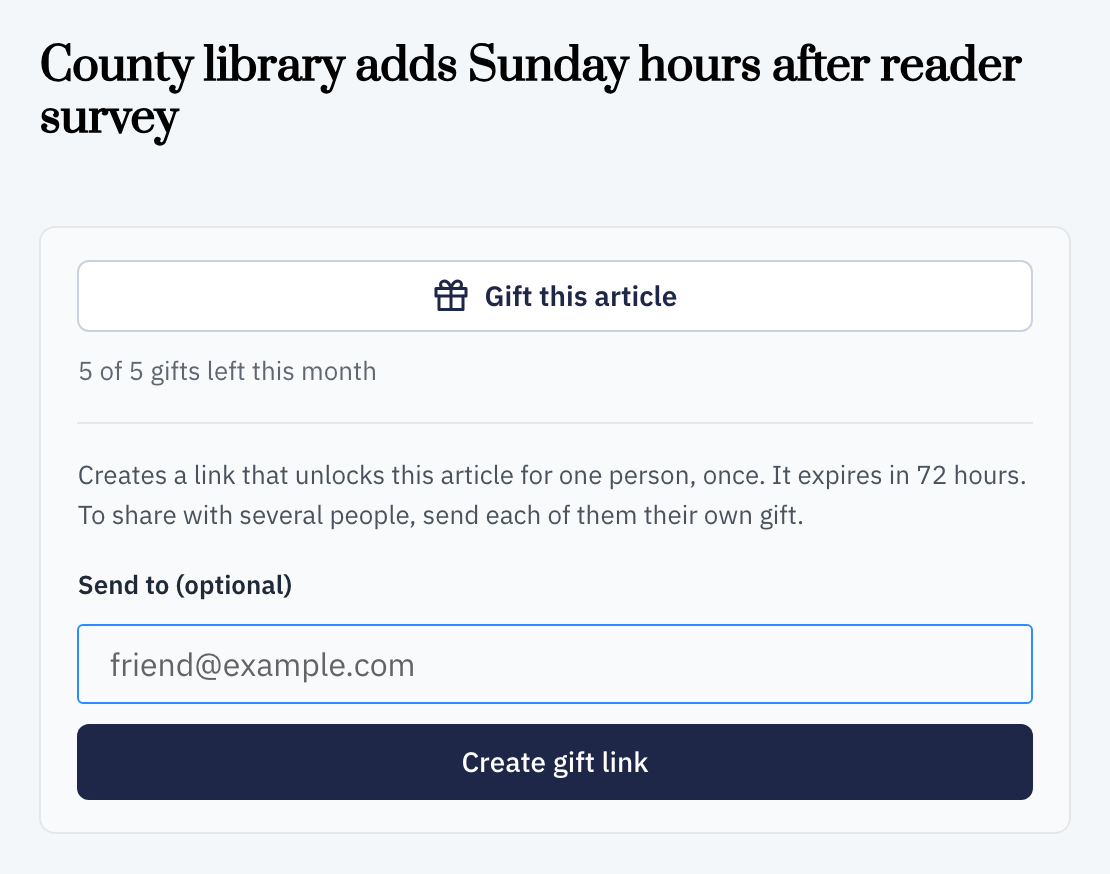
Subscribers can unlock any story for a friend with Gift an Article. The friend reads it free, sees your work, and gets a reason to sign up.
- Gift an Article, no subscription needed to read
- Gift subscriptions for readers who want to give
- Group plans for businesses, schools and households
Trusted by 100+ local publishers



How many free articles should you allow?
Most local publishers are too generous. In our experience, many allow 10 or more free stories a month before asking for anything. Since most visitors read a single story and leave, a 10-story meter means the large majority of your audience never sees the registration wall, let alone an offer to subscribe.
The setup we recommend is simple: one free story for anonymous visitors, then the registration wall; one more for registered readers, then the paywall. Keep breaking news, public safety and anything your community needs to know right now outside the meter.
It can feel strict. But showing the registration wall earlier doesn’t drive readers away, because it doesn’t ask for money. Our guide to getting your first 100 paid subscribers walks through the full setup, and our post on whether a paywall hurts your traffic covers search and social.
It works in small markets too. A paper in a town of 758 people built more than $2,500 a month in subscription revenue with a registration wall, newsletters and a metered paywall.
Metered paywall mistakes to avoid.
A meter with no registration step. If the only ask is a credit card, you skip the readers who aren’t ready to pay yet but would happily give you an email address.
Asking for too much at sign-up. Keep the registration form short. Email address only is best, because every extra field costs you sign-ups.
A vague registration message. “Create an account” gives nobody a reason to act. Tell readers what they get, such as free stories and a weekly newsletter with the news everyone in town is talking about.
Registering readers, then going quiet. A registered reader who never hears from you is barely better than an anonymous one. Pair registration with your newsletter so every sign-up gets your next issue.
Making sign-in a chore. If returning readers have to dig up a password, many give up at the paywall. One-tap sign-in from the newsletter removes that step.
Locking up public-service stories. Leave emergencies, public safety and breaking news outside the meter. It earns trust, and trust is what readers pay for.

“Their counsel on growing our subscriber base has made a material difference in our revenue.”
Les Zaitz · Publisher, Salem Reporter
Questions publishers ask
What is a metered paywall?
A metered paywall lets readers view a set number of free articles before they need to subscribe. It’s a soft paywall, because some content stays free and only regular readers are asked to pay.
What is the difference between a metered paywall and a hard paywall?
A hard paywall blocks every story until the reader pays. A metered paywall lets readers sample a few stories first. Most local publishers do better with a meter, because new readers can see the value before you ask for anything.
How many free articles should a metered paywall allow?
We recommend one free story for anonymous visitors, then a free registration wall, and one more story for registered readers before the paywall. Many local sites allow 10 or more, which means most readers are never asked to register or subscribe.
What is a registration wall?
A registration wall asks readers for an email address, not a payment, to keep reading. It grows your newsletter list and gives you a group of readers to ask to subscribe later.
Will a metered paywall hurt my SEO?
A meter keeps your stories open to first-time visitors from search, which a hard paywall doesn’t. Read Will a paywall hurt your traffic? for the details.
Can I change the meter later?
Yes. You can change how many free stories visitors and registered readers get at any time, without a developer. Many publishers start strict, watch their registrations and subscriptions in the dashboard for a few weeks, then adjust. You can also run memberships and donations alongside the meter.
Can I keep some stories free?
Yes. You choose which stories sit outside the meter, such as breaking news and public safety coverage.
Ready to set your meter?
Talk to a real person about your readers, your meter and your move.