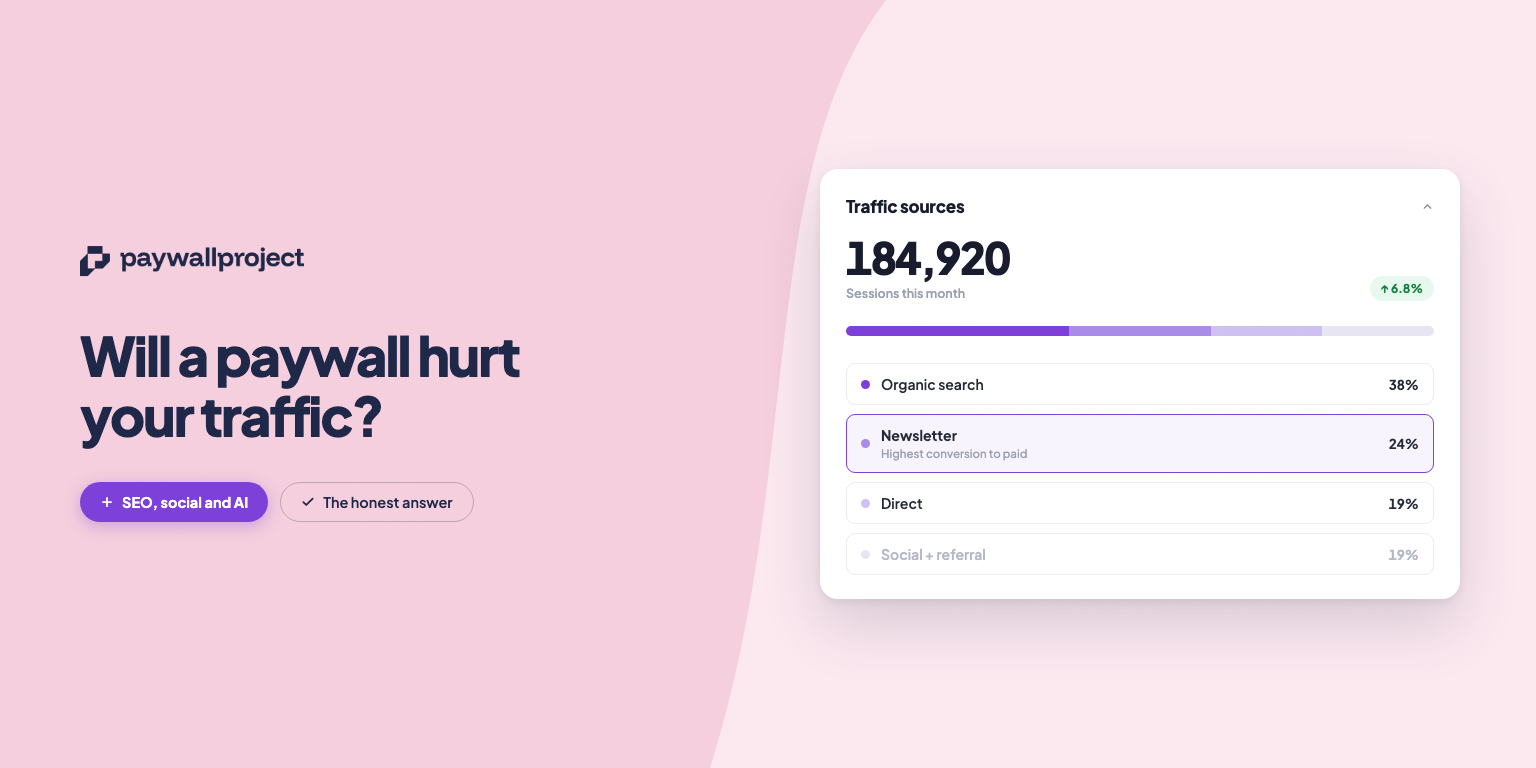
Many publishers are still hesitant about putting up a paywall, worried it will hurt their audience engagement and traffic. However, data shows the opposite can be true if a paywall is set up correctly. This approach can actually lead to growth across the board, including SEO, social sharing, and even AI traffic.
Key Takeaways
- A metered paywall, allowing one free article and requiring registration for a second, can increase overall website sessions.
- Free registrations are crucial for building an email list, which can then be used to drive traffic back to the site.
- Newsletters, even sent weekly, can significantly boost organic search traffic.
- Google’s ranking signals are complex, but a paywall doesn’t necessarily mean a drop in organic traffic.
- AI overviews in search results are impacting traffic, but higher-intention traffic from these summaries can lead to more engaged visitors.
- A “flywheel” framework using free registration, newsletters, and targeted upgrade messaging can drive growth in traffic, email lists, subscriptions, and ad revenue.
The Paywall Hesitation
For years, publishers have been putting out great content but holding back on paywalls. The fear is that a paywall will negatively impact traffic and audience connection. But after working with hundreds of publishers, the reality is often the opposite: growth. The key is setting it up right. The term “paywall” itself sounds like you’re blocking people, and if you do it wrong, you can definitely damage your relationship with your audience. This podcast is for anyone considering a paywall or those whose current paywall isn’t working as expected.
Data Doesn’t Lie: A Case Study
Let’s look at some real data from a regional news publisher. We examined two years of website sessions. About a year and a half ago, this publisher implemented a metered paywall. They allow one free article, then require a free registration for a second article. This registration is key to building their email list. You might think this is restrictive, but here’s what happened:
- Organic Search Traffic: In the last 12 months, they saw 4.2 million sessions, a 34% increase compared to the previous 12 months (3.2 million sessions). This growth happened after the paywall was implemented.
How is this possible? Even with the registration requirement, Google can still access the content. The big win here is the growth in the email list. This publisher sent out a weekly free newsletter to registered users. Despite this infrequent cadence, it was enough to drive significant organic traffic back to the site.
The Power of the Newsletter
Newsletters are a powerful tool. Even a weekly newsletter can bring readers back to your site. When people register for free access, they get added to your newsletter list. This list is gold. You can then use your newsletter to send readers back to your site, where you can present them with upgrade messages.
- Free Registration Prompt: When a reader hits the paywall for a second article, they see a prompt. This prompt highlights that the story is free for them if they register. It emphasizes the word “free” and the reader’s existing interest in the content. They are asked to enter their email and choose a password. This process is designed to convert visitors into registered users and newsletter subscribers.
- Benefits of Registration: This “free registration” strategy can grow your email list significantly faster. It draws a clear line: access to content requires registration. You can be generous, perhaps offering full access for a period after registration or a set number of free articles per month. The data suggests that a model of one free article, then registration for a second, works very well. Even a “hard paywall” (requiring payment before any content) can still work if it includes a free registration option for newsletters.
The Flywheel Framework
This entire process can be thought of as a flywheel:
- Readers Arrive: Visitors come from Google and social media.
- First Article: They read one free article.
- Registration Required: To read the next article, they must register for free.
- Email List Grows: Their email is automatically added to your list (e.g., Mailchimp).
- Newsletter Sent: You send out regular newsletters (daily for news, a few times a week for magazines).
- Traffic Returns: The newsletter drives readers back to your site.
- Upgrade Messaging: On the site, readers see targeted messages encouraging them to subscribe.
This cycle builds your email list with high-intention readers. The newsletter brings them back, and the upgrade messages convert them into paying subscribers. Email is also viral; people share newsletters, further expanding your list. This flywheel approach gives you control over your traffic and revenue, making you less dependent on external algorithms.
Fortifying Against AI and Algorithm Changes
This framework is your defense against the unpredictable nature of AI and search engine algorithms. By building your own direct marketing channel – your email list – you take control. Advertisers love large, engaged newsletters, and your readers will appreciate the content. Over time, you’ll worry less about what Google or Facebook decides to do.
Even publishers who have gone with a hard paywall haven’t necessarily seen drops in Google traffic, as they can configure their paywalls to allow search bots access. Google likely sees high engagement from paid subscribers as a positive signal. The real traffic decline many publishers are seeing now is due to AI overviews in search results, not paywalls. While AI summaries might reduce clicks, those who do click through are often more engaged because they’ve already received a summary and are looking to dig deeper.
Tightening Up Over Time
As you build confidence and see your list and paid subscriptions grow, you can gradually tighten your paywall. Many publishers start with a more generous model (e.g., five free articles) but find that a more restrictive approach (one free article, then registration) works better and faster. Don’t be afraid to be more aggressive with your paywall strategy; users are often more willing to register or pay than publishers fear. A hard paywall is generally not recommended as it severely limits email list growth. However, after building a strong foundation, you can restrict content more while still offering a free article or two, which also helps keep AI out of your content.