Setting up your newsletter correctly could be the most important thing you do for your publication this year. With the right framework, you can turn casual readers into loyal subscribers and paying members. The key lies in understanding the three critical elements: free registration, segmented newsletters, and send frequency.
Key Takeaways
- Free registration (requiring email for a second article) grows email lists 20% faster than traditional newsletter pop-ups.
- Segmenting into “free” and “paid” newsletters allows targeted upgrade messaging without alienating paying subscribers.
- Newsletter frequency matters more than most publishers realize—news publishers should send daily, magazines at least twice weekly.
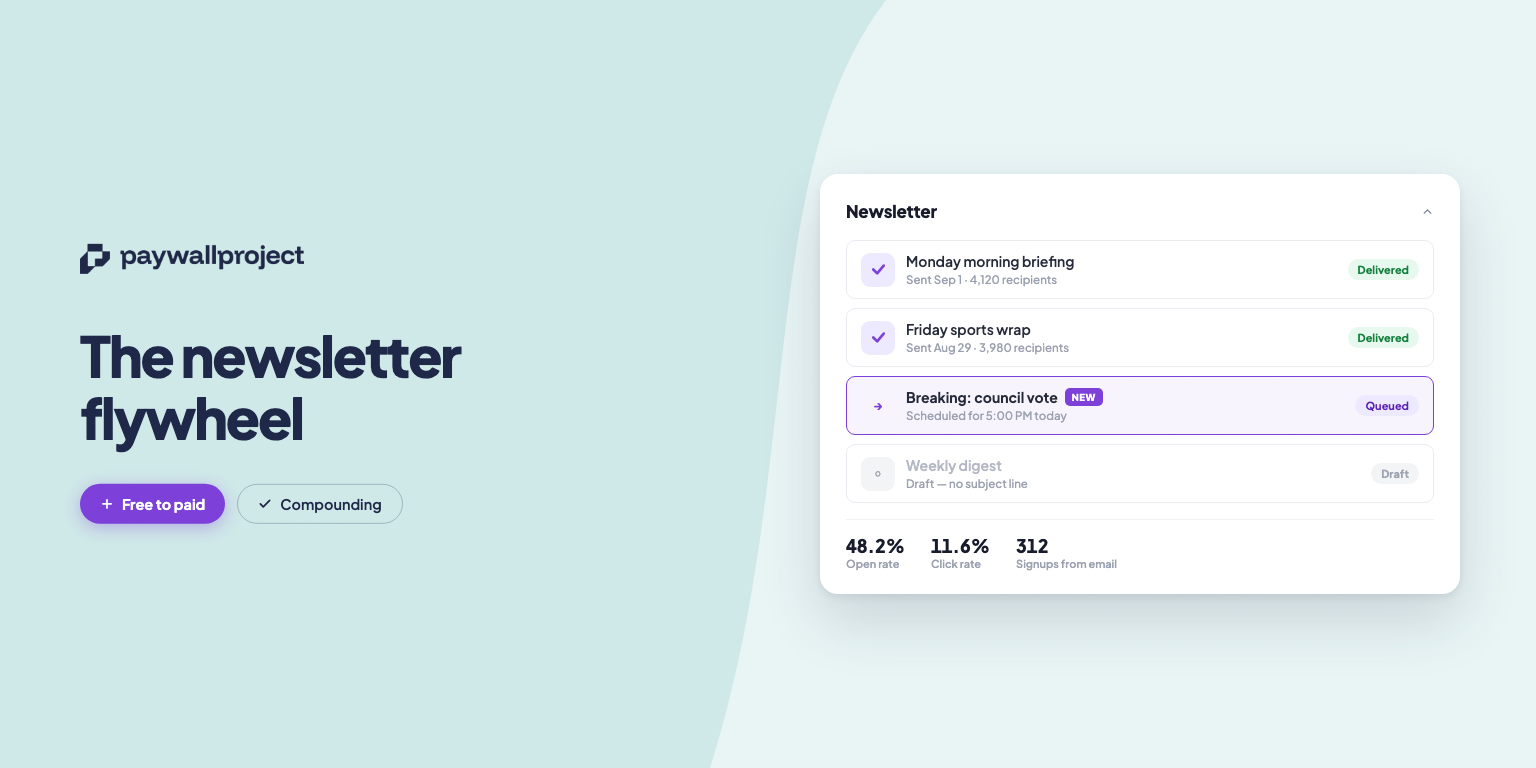
- The flywheel framework creates a self-reinforcing cycle: readers register → join newsletter → return to site → see upgrade messaging → convert to paid.
- Archived content often has higher engagement rates than fresh content, making it valuable for maintaining send frequency.
- Your newsletter is your product—it lands directly in inboxes without depending on algorithms or reader initiative.
Understanding the Three Buckets of Readers
When setting up a subscription platform, readers fall into three main categories. First, there are the loyalists who will pay immediately—they love your content and have the means to support it. Second, there’s random traffic that will never subscribe for various reasons. The third group represents the biggest opportunity: readers who want your newsletter but aren’t ready to pay yet.
The question becomes: how do you nurture this third group into paying subscribers? The answer is a strategic free registration process that builds your email list while moving readers through a conversion funnel.
The Free Registration Strategy
Rather than using pop-ups or slide-ins to collect emails, the free registration approach ties email collection directly to content access. Here’s how it works: give away one article completely free, with no friction. On the second article, present a registration prompt that emphasizes the word “free” and highlights the reader’s existing interest.
The messaging is crucial. Instead of asking readers to “join our newsletter,” you’re offering them continued free access to content they’ve already shown interest in. They simply enter their email and create a password. This approach converts significantly better because you’ve drawn a clear line: more access requires registration.
Publishers using this method see email lists grow approximately 20% faster than those relying on traditional newsletter sign-up methods. The registered readers are also higher quality—they’ve chosen a password, they’re logged into your site, and you can track which articles converted them.
The Two-Newsletter System
Once you have free registration in place, you effectively have two distinct audiences requiring two different newsletters. The free newsletter’s primary job is driving traffic back to your site and presenting upgrade messaging. The paid newsletter rewards subscribers by removing that upgrade messaging and potentially offering additional perks.
For your free newsletter, include upgrade messaging in two key locations: near the top (a simple banner with a title, brief text, and button) and at the bottom (a more detailed promotion with benefits and a prominent call-to-action). Readers who scroll to the bottom of your newsletter are highly engaged—they’re exactly the people most likely to convert.
Paid newsletter differentiation can be simple. Consider offering early delivery (an afternoon edition for paid subscribers only) or full-text emails that don’t require clicking through to your site. iPolitics in Canada uses this approach effectively—paid subscribers receive complete morning briefings they can read entirely within their inbox during their morning routine.
The Flywheel in Action
The framework creates a self-reinforcing cycle. Casual readers arrive from Google, social media, AI, or existing newsletters. They read one free article, then hit the registration prompt on article two. Their email goes into your newsletter system, segmented as a free subscriber.
You send regular newsletters that drive these readers back to your site. On return visits, they see targeted upgrade messaging. The more times they see this messaging, the higher the conversion rate. Meanwhile, your newsletter is inherently viral—people share content they find valuable, expanding your list organically.
This flywheel gives you control over your traffic and revenue. You become less dependent on algorithm changes from Google, Facebook, or emerging AI systems. Advertisers love large, engaged newsletter audiences, and your readers appreciate consistent, valuable content.
Send Frequency: The Overlooked Factor
Perhaps the most underutilized lever in newsletter strategy is frequency. Many publishers, particularly in long-form content, send far too infrequently. Monthly newsletters from magazine publishers or twice-monthly sends from long-form journalism sites leave significant growth on the table.
The data is compelling: comparing two similar regional news publishers, the one sending more frequently outperformed the other by approximately 4x in paid conversions. The difference came down primarily to email cadence.
For news publishers, the minimum should be one daily newsletter, with twice daily being ideal—perhaps with the second send reserved for paid subscribers. For magazine and long-form publishers, aim for at least twice weekly.
The fear of annoying readers is usually unfounded. These are people who opted in with an email and password—they want your content. Your newsletter appears in their inbox among dozens of others. Readers scan subject lines and open what interests them. Even if they only engage with 20% of your sends, that engagement compounds over time. Each newsletter is another opportunity for them to click through, see upgrade messaging, and eventually convert.
Leveraging Your Archives
Publishers worried about having enough content for frequent sends should look to their archives. Evergreen content can be repurposed effectively—most of your audience never saw it the first time. Even recent newsletter recipients may have missed previous sends.
Small Boats magazine, for example, creates dedicated archive newsletters featuring two related older pieces. The surprising finding: archived content often generates higher engagement than fresh content. If you’re bringing back an older article, readers assume it must be particularly valuable.
Implementation Checklist
Start with free registration on your website, setting the meter at one free article before requiring email and password. This fuels everything else. Next, segment your newsletters into free and paid versions, with upgrade messaging only in the free version. Finally, increase your send frequency—be fearless about it.
The entire system can be automated. Once configured, the flywheel runs continuously: building your email list, driving traffic, presenting upgrade opportunities, and converting readers into paying subscribers. Your newsletter becomes not just a communication tool but your primary product—the thing that shows up in inboxes without requiring readers to remember to visit your site.