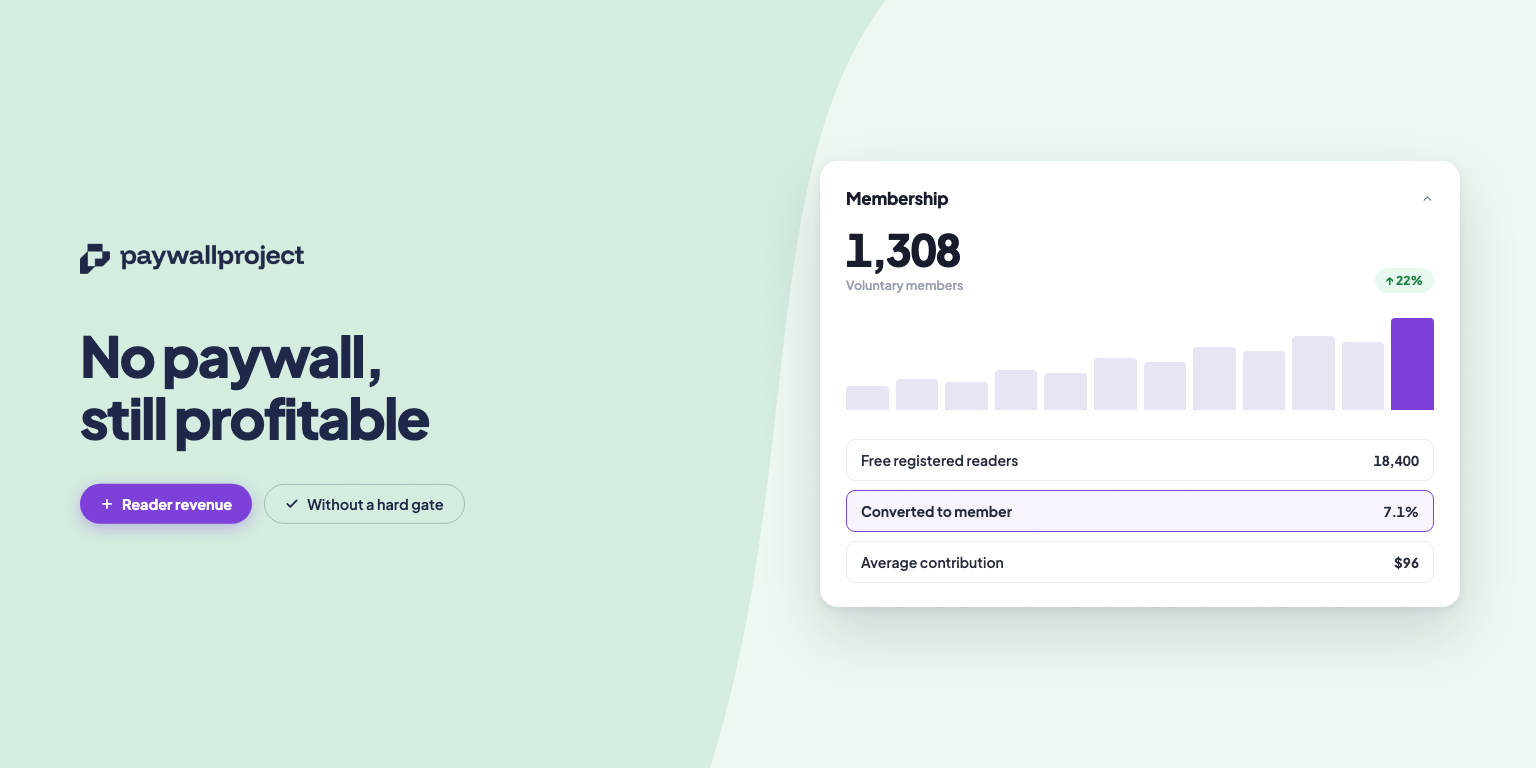
Most publishers assume you need a hard paywall to generate reader revenue. One local news publisher is proving otherwise.
This publisher has no paywall at all. Every article is free to read. Yet readers are still paying, and the numbers are strong. Here’s how they’re doing it.
Free Content, Paid Membership
Instead of charging for articles, this publisher uses a generous free registration wall. Readers get three free article views. On the fourth view, they’re asked to create a free account to keep reading.
Once registered, access to the entire site is unlimited. No metering, no article count, no pressure. So how does a model like this generate revenue?
The answer isn’t the content itself. It’s what readers get when they choose to support the publication financially.
Six Membership Levers That Drive Revenue
Rather than charging for access, this publisher offers a handful of member-only perks that readers can opt into:
- Commenting privileges. Only paid members can comment on stories.
- A welcome gift. New paying members receive a small branded item, like a hat or bag.
- Event discounts. The publisher hosts events a few times a year, and members get discounted or exclusive access.
- An ad-free experience. Higher-tier members can read without ads.
- A subscriber-only newsletter. Paying members get additional content not available to free readers.
- Direct access to editorial staff. Paid subscribers can send questions directly to the newsroom.
None of these require gating the actual news content. They give readers a reason to pay without making payment a condition of access.
Why Gating Comments Instead of Content Works
Requiring payment to comment turns out to be a smart moderation strategy on its own. Readers who’ve entered a credit card are far less likely to leave low-quality or hostile comments.
The same logic applies, to a lesser degree, with free registration. Requiring an account, even a free one, cuts down on anonymous negativity because commenters know their identity is attached to what they post.
Publishers often worry about turning comments on at all. One practical approach: disable comments on Facebook and direct that conversation back to your own site instead. You keep the engagement, the page views, and much of the moderation benefit, without feeding traffic and attention to a platform you don’t control.
A Newsletter Written Like a Personal Letter
This publisher’s newsletter breaks from the typical format. No featured images, no visual teasers stacked on top of each other. Instead, it reads like a short personal note from the editor, two or three paragraphs written in a conversational voice, with article links woven directly into the text.
It’s fast to scan and feels personal rather than automated. A clear call to action at the bottom invites readers to support the publication.
This format also encourages something publishers often overlook: reply engagement. When newsletters come from a real, reply-friendly email address instead of a no-reply account, readers are more likely to respond. That engagement signal matters. Email providers like Gmail use reply activity to help decide whether a newsletter lands in the inbox or gets buried.
The Numbers Behind the Model
After a few months of running this registration wall, the results are strong. The conversion rate from wall view to registration sits at about 5.7%, comfortably in the healthy range publishers typically see.
That’s especially notable given how generous the wall is. Three free articles before any registration prompt is a lot of runway, and readers are still converting at a solid rate.
In roughly three months, this publisher brought in around 2,200 newly registered readers, far more than they saw using a standard email signup widget alone.
Start Generous, Then Tighten Over Time
This publisher’s registration wall isn’t set at the tightest possible point, and that’s intentional. Starting with three free articles builds confidence, both for the publisher and for readers adjusting to the idea of registering.
The average visitor views about 1.7 articles per session. That means a wall set to trigger on the second article view would catch most sessions. A publisher just starting out doesn’t need to go that tight right away. Begin generous, watch the data, and tighten the wall gradually as conversion rates prove out.
Publishers on this journey often expect conversion rates to double or more once they move from three free articles down to one.
The Takeaway for Local Publishers
You don’t need a hard paywall to build reader revenue. A free registration wall, paired with meaningful membership perks, can turn casual visitors into a loyal, paying community without ever locking your journalism behind a login.
The core move is simple: stop treating your newsletter signup as optional. Require an email in exchange for content, start generous, and give readers real reasons to become paying members beyond the articles themselves. For local news publishers with an engaged community, that trade is often an easy one for readers to make.